Knowledge of the unique qualities of South Asian bread makes it possible to have an authentic cultural dining experience. Whether it be a simple everyday meal, a feast prepared at home, or even one of the royal dinners, South Asian flatbreads always remain the center of attraction. There is an impressive variety of bread types made out of region-specific crops utilizing special cookware, and centuries-old experience of baking them. Depending on one’s preference of either charred bread or the daily grain, knowledge of the unique qualities helps to choose the ideal accompaniment to the gravies and other dishes. This allows one to truly appreciate the masterfully prepared products on the dining table.
What Is Naan?
Naan is a chewy, yeast-enriched flatbread typical of South Asian cuisine. Traditional Pakistani bread is made out of all-purpose flour combined with yogurt and yeast to help with fermentation. The dough is then properly kneaded and fermented which allows it to make pockets inside. Afterwards, portions of the dough are slapped against the sides of cylindrical clay ovens. Radiant heat cooks the dough almost instantly creating a crust on the outside and retaining steam inside. This process gives a flatbread airy inside structure and chewiness which fits nicely with robust gravies.
How Is Naan Traditionally Cooked?
The classical technique implies the use of a blazing tandoor – a clay oven heated by charcoal and wood fires. Skilled cooks stretch the dough, slap it against the inner side of the oven, and allow the ambient heat to make the outside crispy but leave the inside soft. This intense environment provides for the distinctive smoky profile of naan found in authentic restaurants. High temperature allows the bread almost instantly locking moisture inside thus making the dough fluffy and tender. Skilled hands and precise timing are required to prevent the burn and make the ideal golden-brown char on the surface of the bread.
What Is Roti?
Roti is a daily staple that is made out of whole wheat flatbread ingredients, clean water, and salt. This unleavened bread requires absolutely no yeast to be included, thus making it an extremely reliable source of comfort for families all over Pakistan. This flatbread not only offers wholesome nutrition but also has the right structure to easily wrap savory food. Mastering this easy yet very important technique is a good way to have an authentic taste of traditional culture brought to the dining table.
How Is Roti Cooked on a Tawa?
A heavy flat or slightly concave cast-iron griddle called tawa allows you to cook roti uniformly. The dough disk is put on the hot metal until the bubbles appear, then it flips over the open fire to become puffed up. Curry Corner uses this traditional method to make sure that the dough cooks thoroughly without becoming overly dry. The traditional apparatus is used in the household daily life since it offers reliable results guaranteeing a tender structure of the dough together with toasted spots on the surface.
- Expert chefs rotate glowing coals constantly to maintain uniform subterranean temperatures.
- Hand-stretching techniques ensure the center remains thick enough to hold heavy gravies without tearing.
What Is Paratha?
Paratha is a truly delicious, multilayered product created thanks to the traditional folding technique and brushing of rich fat between multiple thin sheets of dough. Thanks to the special culinary process, simple daily flatbread gets transformed into a unique multilayered product which will satisfy a heavy appetite and give a truly satisfying experience. Every layer of paratha forms steam pockets which crisp up well during the cooking process making it an exquisite product of flaky exterior and buttery warmth.
How Are Paratha Layers Made?
The dough is being rolled, fat is applied on its surface, pleats or spirals are formed, and rolled out again. Every time when the dough is separated, the steam pockets appear, puffing up the product during the cooking process. Lamination technique is the ultimate secret of making crispy external flakes and having the tender inside. Every fold is bringing an additional layer of richness giving the unique buttery flavor and texture to every bite.
Naan vs Roti vs Paratha: Key Differences at a Glance
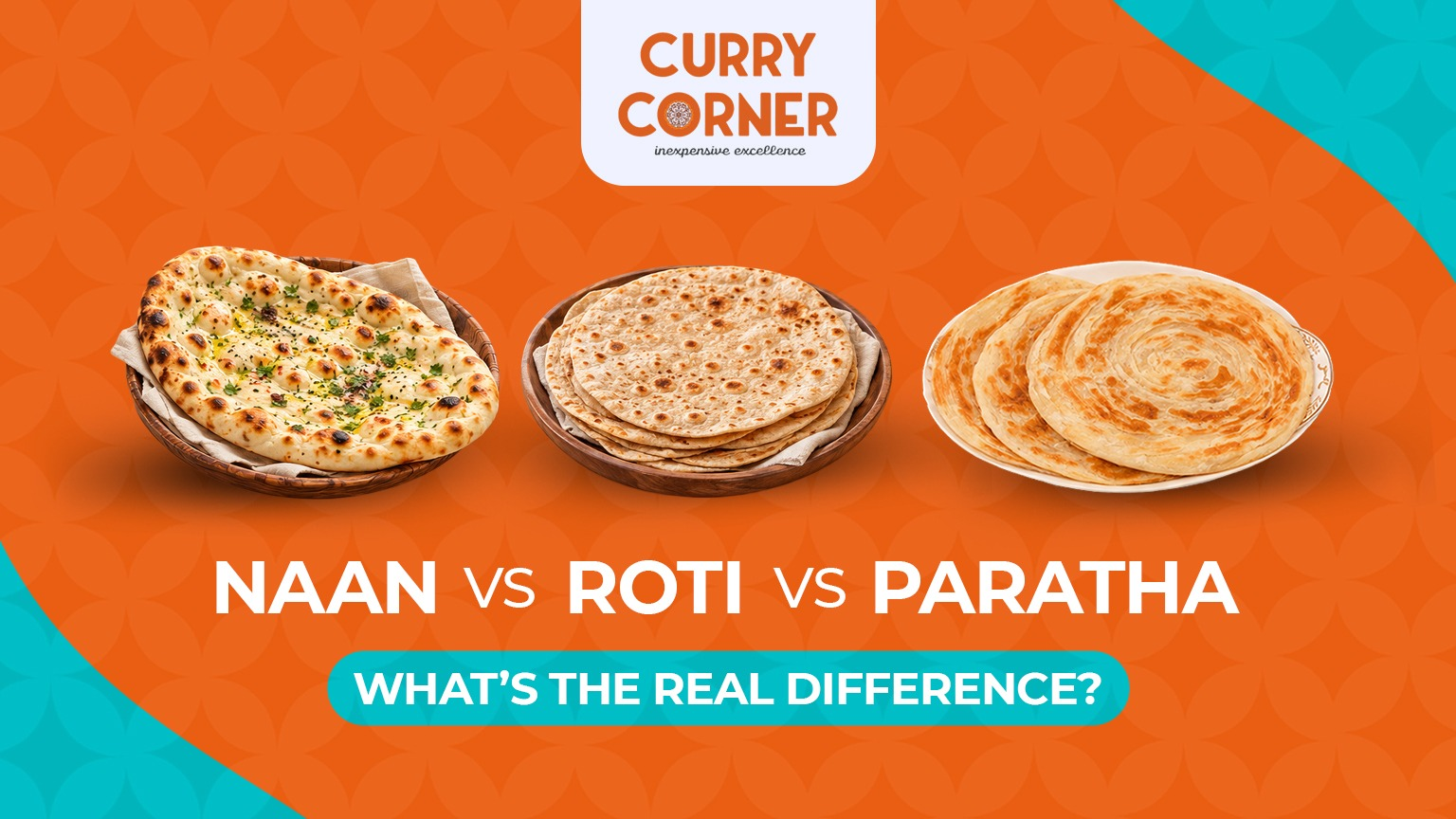
Comparison of Naan vs Roti vs Paratha shows us different regions-specific recipes, textures, and fat content of the bread. While naan has a yeasted, chewy structure, roti stays thin, lean and wholesome. Paratha adds the rich layers of butter and crispy external edges. Knowledge of the difference between the bread allows one to make a proper choice for every heavy stew, dry vegetables, or aromatic rice spread. Every type of flatbread has its purpose in the culinary art, turning regular meals into an authentic feast.
Which Flour Is Used in Naan, Roti, and Paratha?
Naan usually consists of all-purpose flour providing elasticity and ability to stretch. Roti and paratha have their main ingredient in atta flour. Type of grain determines the density, color, and nutritive value of the bread. Looking through our complete Menu allows us to understand that using whole wheat flour adds an earthy flavor and more fiber content, while refined products provide more stretchable dough. The choice of ingredients depends on the final texture of the bread which should be in sync with gravies or other side dishes.
How Do Their Texture and Thickness Compare?
Naan has a thick and pillowy structure with characteristic chewiness due to tandoor baking. Roti has a thin and pliable structure as a whole grain flatbread, while paratha has a flaky flatbread exterior texture combined with a tender crumb which melts in your mouth with every bite. Comparison of these diverse textures demonstrates how unique preparation techniques and cooking methods make a simple dough become an amazing regional delicacy complementing traditional dishes.
Which One Contains More Oil, Butter, or Ghee?
Paratha comes out victorious in this category as it involves the laminating process which demands a high volume of ghee. Roti is almost fat-free unless it is used after cooking, and the naan can contain melted butter on the surface of the bread. The excessive use of butter makes parathas crunchy and delicious as opposed to the lean rotis. Knowing about fat content in different types of flatbreads allows diners to make the right choices based on their nutritional needs without having to give up authentic taste.
- Resting the laminated dough for twenty minutes relaxes gluten strands for easier rolling.
- Alternating butter layers builds structural flakiness throughout the cooking process.
Is Naan Healthier Than Roti?
Roti normally wins in daily nutrition because it employs whole-grain flour which is rich in fiber. On the other hand, naan contains refined flour which gets digested rapidly without giving sustainable energy. Roti will contribute greatly to everyday health, while naan is good for particular occasions. Having the knowledge about these differences will enable one to make the right dietary decisions based on health needs without having to sacrifice authentic taste.
Roti vs Paratha: Which One Should You Choose?
Which type you choose will depend totally on your particular eating occasion, health needs, and lifestyle. Roti fits in well as part of everyday healthy diet, while paratha will serve as a weekend breakfast and festive dish. Looking through our Gilbert Menu will help you have a balanced and very satisfying meal for all people sitting at the table. Whether you prefer fiber-rich and lighter daily nutrition or buttery taste on special occasions, each flatbread is very advantageous and increases you’re eating pleasure.
Tandoor vs Tawa: How Cooking Changes the Flatbread
The cooking appliances totally affect the structure, taste, and moisture content of each flatbread type. Tandoor ovens give smoky and charred taste as a result of high radiant heat and sealing the steam inside leavened dough. In contrast, tawa griddles transfer heat directly through flat metal surfaces and give even browning, toasted smell and flexible structures perfect for everyday tearing and folding. Learning how to control different thermal dynamics enables culinary artisans to work with gluten structure efficiently and transform plain flour into remarkable regional dishes.
Naan, Roti, and Paratha in Indian and Pakistani Cuisine
These three items are the main parts of South Asian meals and anchor everything starting from royal banquets and ending with family dinners. You will get to know how authentic grains unite regional differences and preserve old-time traditions by looking through our Tempe Menu. Each type of flatbread tells its unique story about agricultural peculiarities of certain regions, available fuel and cultural development. Families gather around the table with such aromas daily, creating bonds and celebrating their heritage. The versatility of these flatbreads makes them essential for modern households and professional restaurants.
Best Curries to Serve with Naan
Rich and oily gravies of butter chicken, traditional nihari and hearty paya curry call for starchy and absorbent foodstuff which can accommodate all those spices. Naan will perfectly scoop up these heavy gravies without breaking into pieces during the meal. Looking through our authentic flatbreads will help you see how perfectly baked bread compliments rich gravies. Come to us to have an unforgettable feast of spicy foods, tender meat and hospitality with your family and friends.
Experience Authentic Flavors at Curry Corner
Tasting real South Asian flavor is an exciting adventure you can experience at Curry Corner, our South Asian eatery situated in Arizona. Our menu provides heritage recipes served to your table in perfectly baked flatbreads and slow-cooked meals, both of which are listed on our comprehensive Menu. No matter if you crave the fluffiness of tandoor-baked breads or everyday food choices, we will ensure our kitchen will provide genuine hospitality and outstanding culinary skills. Visit us today to taste our amazing dishes, our inviting ambiance, and the unforgettable flavors of heritage cuisine with your loved ones.
Conclusion!
Choosing the perfect flatbread for your preferred South Asian dish involves appreciation of culinary traditions and regional craftsmanship. No matter if you like tandoor-baked, yeasty bread, ordinary everyday griddle bread, or rich and buttery layered breads, there is no shortage of options for you. Taking into account factors like choice of flour, apparatus for baking, and amounts of fat makes it possible to create perfectly balanced dishes using heritage recipes. In any case, tasting different types of flatbreads adds value to every eating opportunity. Hence, you should Contact us today to schedule the upcoming meeting and have an unforgettable feast with your friends and relatives at Curry Corner.
Frequently Asked Questions
Roti is cooked by placing the rolled whole wheat dough disk onto a hot, heavy flat griddle known as a tawa until small bubbles appear on the surface.
Naan relies on refined all-purpose flour for stretch and chewiness, whereas both roti and paratha utilize nutrient-dense whole wheat atta flour.
Roti serves as an ideal daily option for health-conscious dining, while paratha offers a richer, buttery, and layered indulgence for special weekend breakfasts.
Naan pairs perfectly with thick, oil-rich gravies like butter chicken, traditional nihari, or robust paya curry due to its sturdy, absorbent texture.