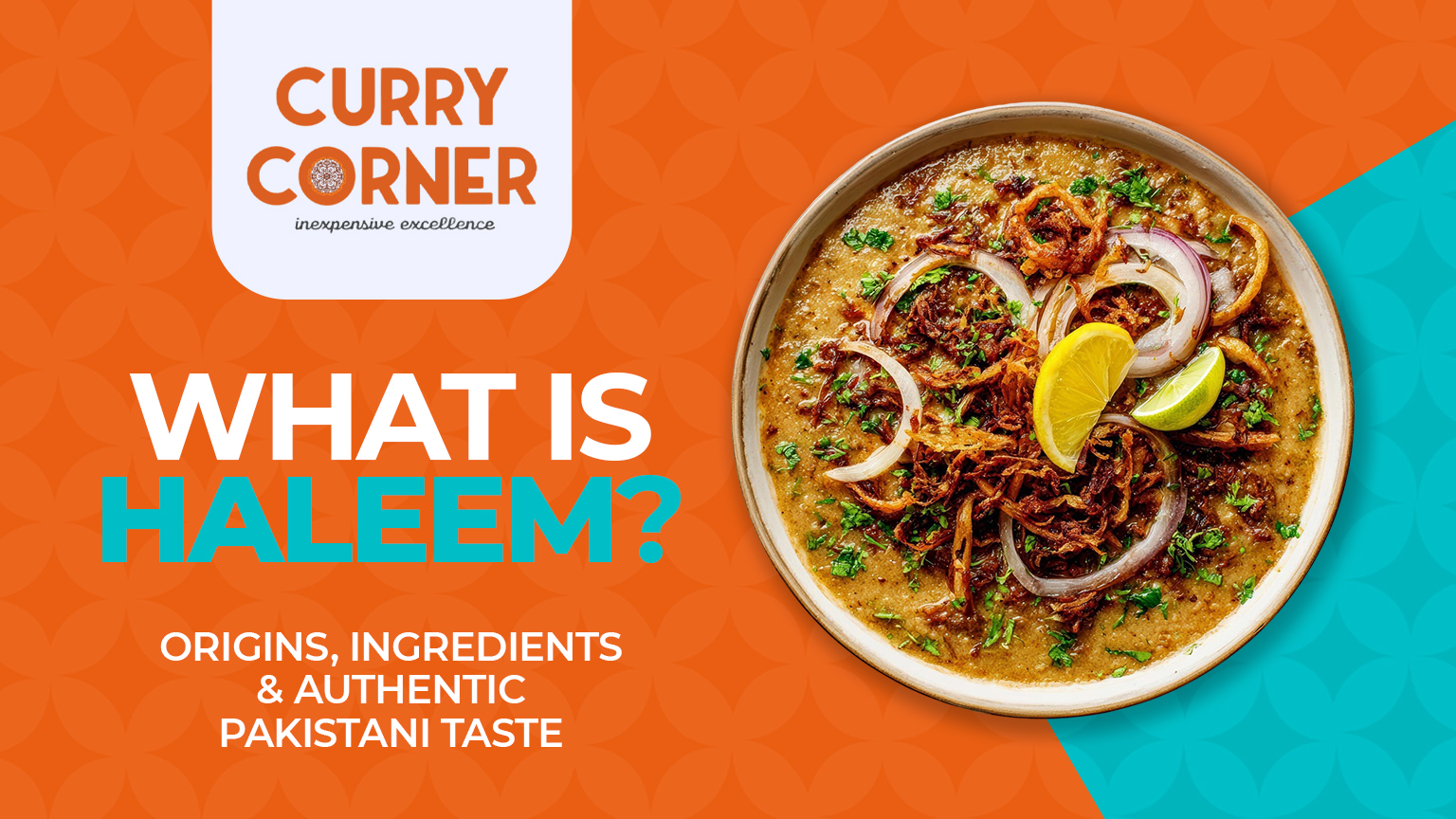
Haleem is a mythical dish, which has deservedly earned its place in the culinary history of South Asia. Consisting of cracked wheat, barley, lentils, fatty parts of meat and whole spices, this traditional dish is cooked for several hours and the meat becomes dissolved in grains, taking a recognizable stringy form.
Apart from being a food item, this dish is a sign of sharing, celebration and culinary craftsmanship tradition. At Curry Corner we preserve these traditions by cooking authentic dishes with the greatest patience and the most delicious ingredients.
What Is Haleem in Pakistani Cuisine?
For Pakistanis, this comforting dish is not just an item, but the challenging culinary centerpiece, which demands considerable labor and craftsmanship. Haleem combines tender meat and cracked grains, as well as yellow pulses which are cooked slowly over firewood till all the separate ingredients become melted together forming a silky base. Traditionally, this dish is cooked in enormous copper pots (degs) for such occasions as festive events, religious holidays (especially Muharram) and other family celebrations. This dish is associated with the long tradition of hospitality, generosity and sharing, which require great team work and considerable patience.
What Makes Haleem a Traditional Pakistani Dish?
Special spice combination, unusual lentil-to-meat ratio and manual beating of the mixture for several hours over low flame represent the traditional Pakistani approach to making this dish. In contrast to the Middle Eastern version of grain porridge, which uses simple spices, the South Asian dish is flavored with red Kashmiri chilies, garlic fried onion oil, turmeric and garam masala. Communities of citizens use wooden paddle (ghota) for stirring of the mixture manually during several hours in order to get stringy meat, called resha.
What Is the Difference Between Haleem and Harees?
Comparing these two iconic slow-cooked grain meals highlights distinct regional preferences in spice intensity, grain variety, and serving customs:
- Historical Roots: Harees originated in the medieval Middle East, whereas Haleem developed across South Asia with regional culinary influences.
- Spice Complexity: While Harees features subtle salt and cinnamon, South Asian recipes rely on vibrant blends of cumin, chili, and garam masala.
- Grain Selection: Coarse cracked wheat forms the sole base of Harees, unlike the multi-lentil, barley, and wheat combination used in Haleem.
- Textural Finish: Harees retains a heavier grain consistency, whereas slow pounding gives Haleem its signature silky and stretchy body.
- Garnish Variations: Plain clarified butter tops traditional Harees, while Haleem is layered with fried onions, julienned ginger, chilies, and fresh lemon.
Where Did Haleem Originate?
Historically, this dish was served in the Arab world to warriors, royal courts, and desert travelers as the original ancestral version of this dish, known as Harisa – a basic medieval porridge of boiled cracked wheat, shredded meat, and light aromatic spices mentioned in such ancient 10th-century Arabic manuscripts as Kitab al-Tabikh. Trade caravans, migratory scholars, and royal cooks spread these first boiling methods from the Middle East to South Asia where subcontinent chefs turned the basic grain stew into aromatic spice feast according to local tastes.
How Did Haleem Travel from the Middle East to South Asia?
Ancient connections between the trade routes of diplomatic exchanges and royal migratory processes have introduced Middle Eastern cooks to the kitchens of the Mughal Empire and the Nizams of Hyderabad. Local chefs have quickly developed the foreign wheat porridge by adding local pulses, turmeric flavor, ground coriander and clarified butter to prepare delicious meals for royal feasts. Our Menu offers you a glimpse of how ancient cross-continental culinary contacts have transformed into regional comfort food dishes.
How Did Haleem Become Popular in Pakistan?
Migration after the partition of the subcontinent has brought talented family cooks and street vendors with their secret spice ratios to the urban food centers such as Karachi and Lahore. Restaurants have mastered the ratio of beef, goat meat, whole grains and aromatic oils, turning the slow-cooked grain stew into a national dish. High nutritional value, extreme heat tolerance and budget-friendly price have allowed this dish to feed numerous people, thus making it suitable for parties and holidays.
What Is Pakistani Haleem Made Of?
The proper allocation of cereals, split pulses, meat protein, pure ghee and aromatics will allow you to get the perfect bowl. The starchy base is made from whole grains, meat gives an umami flavor, and spices are added to balance the density of cooked pulses. Each product has its own role which makes it possible to obtain a balanced texture of the dish, which covers the spoon but is not too dense, and has several levels of flavor.
Which Grains and Lentils Are Used in Haleem?
Cracked wheat (gandum) and hulled barley (jow) form the main structural components that provide natural starches and gluten elasticity. Split yellow peas (chana dal) give robust nutty flavor, while split lentils without skins – moong, masoor, and urad – dissolve completely, forming the velvet-smooth binding paste. This grain blend attaches itself to the shredded braised meat fibers to ensure that this porridge will have a flawless texture and retain heat well during the meal.
Which Spices Give Pakistani Haleem Its Signature Flavor?
Combination of whole and crushed aromatic components at different stages of cooking helps to form the complex aroma of this traditional stew. Such spices as cumin, coriander, turmeric, black pepper and red chili powder serve as a base for the meat gravy preparation during the first stage of cooking. Later, such spices as cardamom, cloves, cinnamon, star anise, nutmeg and mace are added to infuse the grains with top warm notes. Our Gilbert Menu will help you understand the importance of well-balanced whole spices for regional cooking.
How Do Fried Onions, Ginger, and Ghee Enhance Haleem?
A crispy layer made from thinly sliced onions serves as a sweet deep note of the dish, while hot clarified butter (ghee) dissolves fat-soluble components, giving a rich mouthfeel to the stew. The acidity of julienned fresh ginger dilutes thick grains. Guests will certainly appreciate the complex taste profile with earthy and warm notes in perfect harmony with savory umami of meat and gentle spices. The natural sweetness of roasted grains and pulses will balance the pungent taste of meat-based gravy, making it less acidic and hot. Fresh toppings, added to the hot dish right before serving, will add crispy touches to each bite of the dish along with herbs and spices.
What Does Authentic Pakistani Haleem Taste Like?
Cooking at low temperature and beating breaks down the cellular structure of the grains and makes it possible to get the release of starch and gluten from them. The chefs beat the meat with wooden paddles (ghota) and add it to the porridge of the grains, breaking down the fibers of the meat into pieces. Threads of protein connect with the starch molecules making it possible to get a thick, smooth and elastic texture without adding dairy thickeners and processed starch.
Why Does Haleem Have a Thick, Creamy Texture?
The creation of authentic recipes is a complicated multistep process that involves a lot of patience, timing and physical work. To cook the dish, the chefs need to soak wheat, barley and pulses overnight in order to soften the fiber contained in these products prior to cooking. Also, they need to braise meat in spicy onion-tomato gravy (korma) until the meat becomes easy to separate from the bones. All these ingredients are cooked together in one pot and are beaten for several hours at low temperature.
How Does Goat Haleem Taste Compared With Chicken or Beef Haleem?
Selecting different protein bases changes the stew’s overall fat richness, meat fiber length, and aromatic depth:
- Goat Haleem: Rich and deep with a traditional earthy umami flavor, luxurious bone marrow depth, and a silky, fat-infused texture.
- Beef Haleem: Robust and savory with strong meat fibers that create an exceptionally long, stringy, and deeply comforting texture.
- Chicken Haleem: Light and mild with a pale golden color that lets subtle lentil, grain, and herbal spice notes shine brightly.
How Is Traditional Pakistani Haleem Prepared?
Authentic recipe preparation involves a highly complicated multistep procedure which is based on patience, timing and physical work. To make the dish, the chefs soak wheat, barley and pulses overnight in order to soften the fiber in these products before cooking them into the porridge from grains. Separately they braise meat in the spicy onion-tomato sauce (korma) until meat gets easily separated from the bones. All the ingredients are combined in one big pot and are beaten for several hours at low temperature.
Why Are Meat, Wheat, and Lentils Cooked Slowly?
The low temperature allows it to destroy the collagen and connective tissue of bone-in meat, thus creating rich gelatin. The low temperature allows it to fully soften the grains of wheat and hard split pulses without burning and gluing them to the bottom of the pot. Slow thermal decomposition gradually converts proteins, starch of pulses and aromatic oil into a balanced flavor which can never be achieved at fast-pressure cooking or artificial boiling.
How Is Haleem Traditionally Served and Eaten?
Pouring the hot stew right out of the pot into the wide bowls creates the glazing surface with spiced red oil (tari) on top. The guests serve their own portions of the dish at the table with the help of fresh sharp garnishes that are carefully arranged in the row on the serving plates. A little amount of fresh lemon juice and crispy onions will make the comforting grain bowl a dynamic eating experience engaging all five human senses.
What Toppings and Garnishes Go with Haleem?
Fresh sliced toppings help compensate for the natural density of slowly cooked meat and wheat starches. Sweetly caramelized fried onions provide the crunchy texture, while the fresh razor-thin ginger adds fresh clean heat that cuts through the rich fat content of the dish. Green chilies offer bright pops of spice, coriander – clean herb aroma and fresh lemon juice – citric acidity.
Where Can You Try Authentic Pakistani Haleem in Tempe, Arizona?
Eating the original comfort food of South Asia in the Southwest requires commitment to the original methods of cooking and ingredients. At Curry Corner, our chefs use traditional methods of preparing recipes from scratch using high-quality meat, whole grains and spices. Our friendly dining room in Tempe gives food lovers an opportunity to experience the real flavor of Pakistani hospitality in Arizona without any compromises.
Discover Goat Haleem at Curry Corner AZ
If you are a meat lover, you will appreciate the specialty of Curry Corner, which is slow-simmered goat. Our chefs make this dish by using the combination of tender bone-in meat and cracked wheat, barley and split pulses. The beating makes this dish famous for its unique silky and stringy texture. You can view our localized Tempe Menu to see how our unique cooking methods give you access to authentic regional comfort food right in Arizona.
Final Thoughts!
South Asian grain and meat stews slowly cooked are a crown of comfort food allowing obtaining an unforgettable dish from simple pulses. For centuries this dish has gathered people around the table in order to share warmth and flavor. Regardless of whether you try this dish for the first time or are trying to remember your childhood tastes, each bite of this dish will provide you with an unforgettable experience. Welcome to our restaurant or Contact us to get information about our menu and catering services!
Frequently Asked Questions
This dish is enjoyed across South Asia. Pakistani versions are famous for bold spices, rich beef or goat foundations, and slow-pounded stringy meat textures.
Yes, vegetarian versions use cracked wheat, barley, lentils, and rich spices, substituting meat with soy chunks or extra pulses for satisfying texture.
Historically served as a hearty breakfast, it is now enjoyed across all meals as a weekend lunch, festive dinner centerpiece, or holy observance feast.
It requires hours of slow simmering to dissolve dense grains and break down meat fibers for manual pounding into a smooth, elastic texture.
Yes, it offers dietary fiber, high-quality protein, and complex carbohydrates, while digestive spices like ginger and turmeric support smooth, gentle digestion.