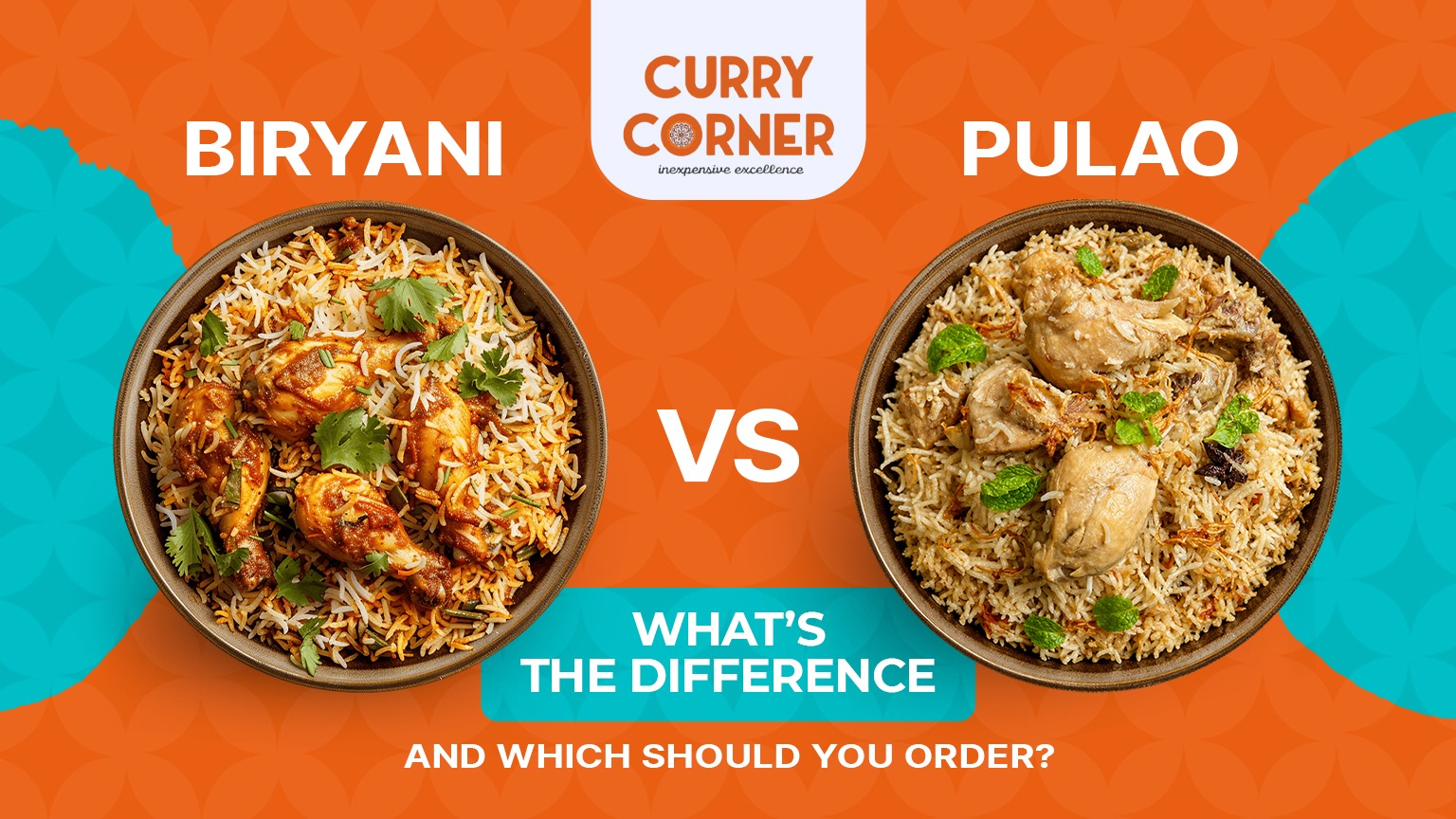
There are few dishes which can make people fall in love with South Asian food more than biryani vs pulao. Both are exceptional Indian rice dishes consisting of fragrant basmati rice, meat or vegetables and incredible aromatic seasonings!
Yet, if you ask any food enthusiast whether they are the same thing, you are likely to spark a lively debate. While they might look similar at first glance, they are distinct culinary creations with entirely different soul-stirring personalities. Whether you are looking to expand your cooking repertoire or planning your next meal at Curry Corner, understanding what sets these two iconic rich rice dishes apart will elevate your appreciation for South Asian gastronomy.
Key Takeaways
Studying the features of South Asian cuisine, it is possible to find many interesting facts about these two famous dishes. Knowing the differences between them is a must for every person to be able to make a right choice in terms of cooking or choosing what to order in a restaurant.
- Cooking technique differs, because biryani is made using the method of layering with the use of the dum method, while pulao uses one pot cooking.
- Differences are noticeable even by the way they smell: biryani is made of a spicy, complicated mixture of spices, and pulao is flavored with milder spices and whole spices with the addition of meat broths.
- The process of adding meat and rice to the dish is very different: in biryani meat and rice are added beforehand by layering, in pulao meat and rice are cooked together in one stock.
- They are used during different culinary occasions: biryani is made for big celebrations and takes a lot of time and effort, and pulao is a comfort dish for daily meals.
- They can be adapted depending on the local products and preferences: in such a way, they turn into the local dishes around the globe.
What Is Biryani?
Proper biryani preparation requires understanding how biryani is cooked. It is interesting to know the secrets of preparing royal feasts and understand that the method of preparation is really evidence of culinary art. It is feast to eyes and it is a complicated yet remarkable dish, meat and layers of partly cooked basmati rice are interwoven. All the ingredients are mixed in the aroma of saffron, ghee, mint and fried onions using the dum cooking method as the dish is tightly covered. Every ingredient is distinguished with its specific aroma and flavor. It is really a masterpiece of traditional South Asian cuisine, which needs some special cooking techniques from the master chef.
What Is Pulao?
Finding out about the nuances of preparation of a comfort dish will give you a good understanding of this humble, but tasty sibling of Aromatic rice recipes. Its main features are a simple method of preparation and the ability to give a feeling of comfort, as it is prepared by using One-pot cooking. Whole spices are added to meat or vegetables and sautéed before being added to the raw rice and boiled in seasoned liquid. The magic of preparing pulao is that it is able to retain the grains while showcasing the perfect harmony of ingredients. separated, light, and perfumed with spices like cumin, cardamom, and cloves.
What Are the Key Differences Between Biryani and Pulao?
Knowing the differences of these two classical dishes means to take a look at the processes taking place in a professional or home kitchen. Each recipe is based on completely different principles of cooking, temperature management, and treatment of ingredients, which change the visual result of cooking. Understanding all these kitchen dynamics will allow you to recreate authentic regional flavors and manage the cooking biryani vs pulao in the most effective way.
How does the cooking method differ between biryani and pulao?
The biggest difference between these two dishes is the way the interaction of the ingredients and heating process takes place: biryani is cooked using layered cooking with the isolation of marinated meat and the boiling of the rice, while pulao is cooked in such a way that raw rice is added to the mixture of sautéed meat and liquid in the pot.
What makes biryani spicier than pulao?
Biryani spices, yoghurt marinades, fried onions and fresh mint play a major role in the richness of the biryani flavors. In pulao, all the garam masala spices are added and not as strong ground pastes so that the natural meat broth can add flavor to the rice without overpowering your taste buds with the intense heat of chili.
History and Origin: Where Did Biryani and Pulao Come From?
It is always interesting to understand the history of the origins of the dish, and studying the history and evolution of these legendary dishes will explain their popularity and value in kitchens. Learning about their travels from ancient royal courts to traditional family gatherings will tell you about centuries of culinary traditions and culture exchange. This information will allow every food lover to feel the heritage of traditional South Asian food in every pot of rice served in a restaurant.
Where did biryani originate?
Although it is believed that the rice dishes originated in Persia and the Indian subcontinent, what makes biryani authentic is its presence in the royal kitchens of the Mughals. The name of this dish is taken from the Persian word ‘birian’, which means ‘frying before cooking’.’. It is connected with the initial way of cooking meat and rice by royal Khansaa’s for emperors.
Where did pulao originate?
Pulao has an even more ancient origin coming from ancient Persia, and the recipes of it are recorded since the tenth century in works of visionary scholars. Eventually, this dish spread across the Middle East, Central Asia, and South Asia and turned into local dishes.
Types of Biryanis: Which Regional Style Is Right for You?
The biryani has some amazing regional variants with a long culinary history, unique mixtures of spices and cooking process varying greatly from province to province. There is such a variety of sub-style in this delicacy, from the regal kitchens of the Mughals in the north to the spice-filled coasts of the south. Experiencing the amazing regional variants of this dish, especially when learning which rice is best for biryani gives a fantastic chance for anyone who loves good food to try something different and gain a greater understanding of the incredible world of South Asian culinary tradition.
‣ Hyderabadi Biryani
Hyderabadi Biryani is a remarkable cuisine created directly from the kitchen of the king himself. It includes meat that is prepared with the help of yogurt, raw papaya, and lots of spices, which is further combined with raw basmati rice in a heavy pot, which is sealed hermetically using dough.
‣ Lucknowi (Awadhi) Biryani
Lucknowi Biryani, which is sometimes called Awadhi Biryani, is renowned for its elegant refinement and delicacy. Meat is first prepared separately in a special fragrant sauce until it becomes tender, after which this delicious rice with meat is skillfully combined with half-cooked rice, with a focus on floral water instead of hot spices.
‣ Pakistani Biryani
Karachi/Pakistani Biryani is famous for its zesty spicy flavor, which is enjoyed by all spice lovers in the world. It contains juicy tomatoes, strong green chilies, sweet prunes, and red chili powder, providing a bright, hot, and delicious dish.
‣ Kolkata Biryani
Kolkata Biryani is distinguished by the unique addition of boiled potatoes and eggs. It includes a lot of sweet kewra water, along with nutmeg flavors.
‣ Sindhi Biryani
Sindhi Biryani features a remarkably generous amount of fresh green chilies, mint, coriander, onions, and sour plums. These bold ingredients showcasing a striking difference in spices are balanced beautifully with tender chunks of meat, producing one of the most intensely spicy and flavorful variations available.
‣ Malabar / Kerala Biryanis
Malabar / Kerala variants use short-grain aromatic Kiama or Jeera kasala rice instead of standard basmati. This coastal specialty is cooked carefully with ghee, fennel, and rich coconut notes, delivering a completely unique texture and flavor profile rooted in southern traditions.
Types of Pulao: Regional Variations Worth Knowing
The lightness and the fact that it can be prepared easily as rice with vegetables or meat makes pulao a very versatile dish. That is why it is very popular among many nationalities and cultures across the world. Being very tasty and comfortable, this dish suits any event and time of the day, regardless of whether it is just an ordinary meal or some celebration. Pulao is very unique and comfortable to eat due to its taste of spices and freshness of ingredients.
‣ Yakhni Pulao
Yakhni Pulao features rice cooked entirely in a rich, strained meat broth that has been deeply infused with fennel seeds, coriander seeds, and whole warming spices. This technique ensures every single grain absorbs maximum nourishment and comforting flavor.
‣ Matar Pulao
Matar Pulao stands out among traditional aromatic rice recipes as a classic vegetarian staple enjoyed widely across South Asia, featuring sweet green peas tossed delicately with fragrant basmati rice, pure ghee, warm cumin, and aromatic whole spices for a deeply comforting daily meal.
‣ Kabuli Pulao
Kabuli Pulao stands as an iconic Afghan masterpiece featuring caramelized carrots, sweet golden raisins, and a wonderfully tender lamb shank buried beneath a glorious mound of fluffy long-grain rice, creating an unforgettable balance of savory and sweet flavors.
‣ Kashmiri Pulao
Kashmiri Pulao serves as a truly festive and colorful dish requiring careful attention during pulao preparation— heavily loaded with assorted dry fruits, fresh fruits, and a delicate touch of premium saffron, creating a magnificent culinary masterpiece that brings unmatched vibrancy, sweetness, and elegance to special celebration tables everywhere.
‣ Vegetable Pulao
Vegetable Pulao offers a wonderfully colorful and dependable everyday meal choice, generously loaded with tender carrots, hearty potatoes, crisp beans, and garden-fresh green peas to deliver a wholesome, balanced, and deeply nourishing dining experience for the whole family.
‣ Bohri Pulao
Bohri Pulao highlights a unique tomato-heavy, spicy meat preparation enhanced by traditional pulao spices that is traditionally enjoyed during large community feasts, featuring distinct layered flavors, aromatic spices, and a deeply rich heritage that brings people together over unforgettable communal meals.
Which Is Healthier: Biryani or Pulao?
In all these classic culinary dilemmas the choice is for pulao, since this dish is usually prepared with less additional fat and oils. The ghee, fried onions and rich yogurt marinade are used often in biryani, making this dish more fatty and high-caloric. However, portion control and quality of ingredients play a key role in determining nutrition.
Is Biryani Just Spiced Pulao? The Key Distinction Explained
It is quite wrong to think that biryani is only the elevated version of pulao; however, after a close examination of the philosophy of these dishes, it is obvious that these two meals differ greatly. While pulao is a united dish when rice is cooked with absorption of liquid, biryani is a dish, which consists of several separate pre-cooked elements. Understanding why is biryani different from pulao comes down to recognizing meticulous layering techniques versus unified one-pot simmering methods.
Where to Find the Best Biryani and Pulao in Arizona
Let’s be realistic, just talking about all this delicious food makes you hungry. Finally, when you’re ready to have fun, nothing should be in your way other than a true restaurant. From the weeknight meal for your family’s comfort to the feast for the family gathering, it’s important to learn the place that knows how to cook and how to use their spices properly. Eat a good meal properly prepared. Browse our Tempe Menu to eat a good meal properly prepared.
Curry Corner Tempe, AZ (Best for Authentic Pakistani Biryani)
For those searching for the absolute best South Asian flavors in the desert, Curry Corner serves some of the finest Pakistani rice dishes in the region. You can explore their full offerings by checking out the Gilbert Menu or viewing the main Menu to find your next favorite meal prepared fresh daily.
The End Note!
When all is said and done, the great debate between biryani and pulao isn’t really about declaring a definitive winner. Both of these iconic rice dishes hold a cherished place in South Asian culinary history, offering something unique for every palate and occasion. Whether you lean toward the bold, layered complexity of a celebratory biryani or prefer the comforting, subtle warmth of a homestyle pulao, both dishes celebrate the incredible artistry of spice and grain. Whenever you are ready to experience these authentic flavors firsthand, feel free to reach out and Contact us to plan your next visit.
Frequently Asked Questions
Yes, biryani generally packs more heat and bold flavor due to heavy marinades, fresh herbs, and layered ground spices. Pulao focuses more on the subtle, aromatic warmth of whole spices and a comforting meat broth.
Shifting away from basmati can change the texture, though long-grain varieties are traditionally preferred for both dishes because of their fragrance, non-sticky texture, and ability to absorb flavors evenly without breaking.
Biryani requires a much more labor-intensive preparation process. It involves separate marinades, pre-cooking the meat and rice independently, and meticulously layering everything before selling it for the traditional steam process.
While pulao is a beloved and comforting everyday meal, grand celebrations and weddings in South Asia traditionally favor biryani because of its rich, festive presentation and deeply complex flavor profile.
You can experience exceptional, authentic Pakistani biryani and flavorful rice dishes at Curry Corner, known for serving traditional meals crafted with genuine spices and expert culinary techniques.